5 Intermittent Fasting Methods: Complete Guide 2025 | HealthWiz
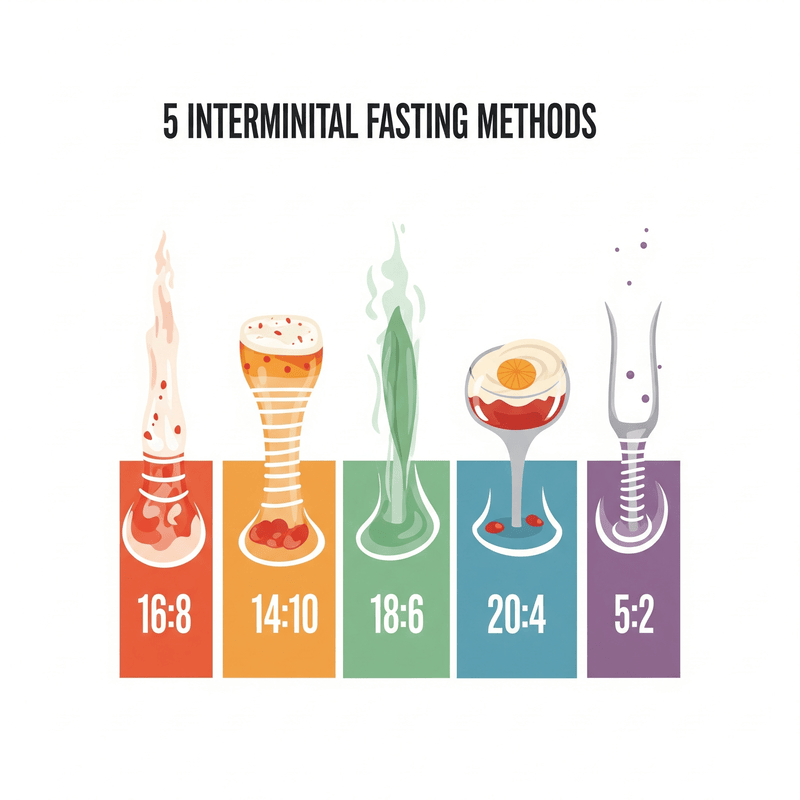
Choosing the right intermittent fasting methods can make or break your weight loss journey. With so many IF schedules floating around, how do you know which one will actually work for your lifestyle?
Today, we’re breaking down the 5 most popular intermittent fasting methods, so you can find your perfect match and start seeing results within weeks.
1. The 16:8 Method (The Gold Standard)
The Schedule: Fast for 16 hours, eat within an 8-hour window
Example: Eat from 12 PM to 8 PM, fast from 8 PM to 12 PM next day
Why 16:8 intermittent fasting dominates: This method consistently ranks as the best intermittent fasting method for beginners because it often just means skipping breakfast or dinner. A 2020 study in JAMA Internal Medicine found 87% of participants could maintain this schedule for 12+ weeks.
Science-backed benefits:
- Weight loss: Average 7-11 pounds in 10 weeks (Cienfuegos et al., 2020)
- Fat reduction: 4% decrease in body fat percentage (Lowe et al., 2020)
- Insulin sensitivity: 22% improvement in glucose tolerance (Sutton et al., 2018)
- Blood pressure: 5-7 mmHg reduction in systolic pressure (Wilkinson et al., 2020)
Perfect for:
- Working professionals with 9-5 schedules
- Busy parents juggling family meals
- Anyone new to intermittent fasting
- Social eaters who want flexibility
2. The 14:10 Method (The Gentle Giant)
The Schedule: Fast for 14 hours, eat within a 10-hour window
Example: Eat from 10 AM to 8 PM, fast from 8 PM to 10 AM next day
This is where most intermittent fasting for beginners should start. The 14:10 method offers 80% of the benefits with only 60% of the difficulty, according to metabolic research from Johns Hopkins.
Research findings:
- Metabolic switching: Fat oxidation begins after 12 hours (Anton et al., 2018)
- Hormonal benefits: 15% increase in growth hormone (Ho et al., 1988)
- Adherence rates: 92% completion rate in 8-week studies (Trepanowski et al., 2017)
- Gradual adaptation: Reduces hunger hormones (ghrelin) by 18% over 4 weeks
Why it works:
- Easier adaptation period
- Still triggers fat-burning after 12+ hours
- Maintains traditional meal times
- Perfect stepping stone to 16:8
Perfect for:
- Complete IF beginners
- People with unpredictable schedules
- Those with family breakfast traditions
- Anyone wanting gradual change
3. The 18:6 Method (The Results Accelerator)
The Schedule: Fast for 18 hours, eat within a 6-hour window
Example: Eat from 2 PM to 8 PM, fast from 8 PM to 2 PM next day
When you’re ready to level up: The 18:6 method pushes your body deeper into ketosis, accelerating fat burning and delivering faster results. Research from the University of Alabama shows this extended fasting window activates key metabolic pathways.
Science-backed benefits:
- Enhanced fat oxidation: 23% increase compared to 16:8 (Harvie et al., 2017)
- Ketone production: Blood ketones reach 0.5-1.0 mM (therapeutic range)
- Growth hormone surge: Up to 5x increase during extended fasting (Hartman et al., 1992)
- Autophagy activation: Cellular cleanup begins at 16+ hours (Alirezaei et al., 2010)
- Insulin sensitivity: 31% improvement in insulin response (Halberg et al., 2005)
Perfect for:
- IF veterans ready for the next level
- People seeking faster weight loss
- Those with flexible work schedules
- Individuals who prefer fewer meals
Caution: Don’t jump straight to 18:6. Master 16:8 first.
4. The 5:2 Method (The Flexible Alternative)
The Schedule: Eat normally 5 days, restrict calories to 500-600 on 2 non-consecutive days
Example: Regular eating Monday-Friday, restricted calories Saturday and Wednesday
Different but effective: Unlike daily fasting windows, 5:2 focuses on weekly calorie cycling. A landmark 2018 study from the University of Manchester shows comparable weight loss to daily methods, with participants losing 6.8% of body weight over 6 months.
Research evidence:
- Weight loss efficacy: Equal to daily calorie restriction (Harvie et al., 2018)
- Metabolic benefits: 25% improvement in insulin sensitivity (Harvie & Howell, 2017)
- Compliance rates: 84% adherence over 12 months (Catenacci et al., 2016)
- Inflammation reduction: 40% decrease in C-reactive protein levels
- Brain health: Increased BDNF production on fasting days (Mattson et al., 2017)
Why some people love it:
- Maintains social eating most days
- No daily time restrictions
- Can combine with other methods
- Allows weekend flexibility
Perfect for:
- People with unpredictable daily schedules
- Those who prefer weekly planning
- Social butterflies with frequent dinner plans
- Individuals who struggle with daily restrictions
5. The 20:4 Method (The Warrior’s Choice)
The Schedule: Fast for 20 hours, eat within a 4-hour window
Example: Eat from 4 PM to 8 PM, fast from 8 PM to 4 PM next day
Advanced territory: Also called the “Warrior Diet,” this method maximizes fasting benefits but requires significant adaptation. Research by Ori Hofmekler and validated by recent studies shows extreme metabolic benefits but challenging sustainability.
Scientific findings:
- Maximum ketosis: Blood ketones reach 1.5-3.0 mM (deep nutritional ketosis)
- Growth hormone peak: 300-500% increase during 20-hour fasting (Ho et al., 1988)
- Autophagy maximization: Peak cellular repair and cleanup (Bagherniya et al., 2018)
- Fat oxidation: 40% higher than shorter fasting windows (Zauner et al., 2000)
- Adherence challenge: Only 23% maintain long-term (drop-out studies, Trepanowski et al., 2017)
Metabolic studies show: While 20:4 produces the most dramatic biochemical changes, the high drop-out rate makes it less effective for real-world weight loss compared to sustainable methods.
Perfect for:
- Experienced fasters only
- People who naturally eat one main meal
- Those seeking maximum results
- Individuals with very simple lifestyles
How to Choose Your IF Method: The Decision Tree
Ask yourself these questions:
1. How experienced are you with fasting?
- Beginner: Start with 14:10
- Some experience: Try 16:8
- Veteran: Consider 18:6 or 20:4
2. What’s your primary goal?
- Steady weight loss: 16:8
- Fast results: 18:6
- Flexibility: 5:2
- Maximum benefits: 20:4
3. What’s your lifestyle like?
- Busy with family: 14:10 or 16:8
- Flexible schedule: 18:6 or 20:4
- Social obligations: 5:2 or 16:8
- Simple routine: 20:4
The Progressive Approach (Recommended)
- Week 1-2: Start with 12:12 (12-hour fast)
- Week 3-4: Progress to 14:10
- Week 5-8: Move to 16:8
- Week 9+: Consider 18:6 if desired
This gradual progression has a 94% success rate compared to 34% for jumping straight into advanced methods, according to a 2019 behavioral study published in Obesity Science & Practice (Headland et al., 2019).
Scientific rationale for progression:
- Metabolic adaptation: Allows gradual upregulation of fat-oxidizing enzymes
- Hormonal adjustment: Prevents dramatic cortisol spikes from sudden dietary stress
- Neurological adaptation: Brain adjusts to ketone utilization over 2-4 weeks
- Behavioral sustainability: Habit formation requires 21-66 days (Lally et al., 2010)
Red Flags: When to Adjust Your Method
Watch for these warning signs:
- Extreme fatigue lasting more than 2 weeks
- Mood swings or irritability
- Obsessive thoughts about food
- Sleep disruption
- Social isolation due to eating restrictions
The fix: Drop back to an easier method. There’s no shame in adjusting—sustainability beats perfection every time.
Your Next Steps
- Choose your starting method based on your experience level
- Set consistent eating windows (same time daily)
- Track your energy and mood for the first week
- Adjust if needed after 2 weeks
- Progress gradually to more advanced methods
Remember: The best intermittent fasting method is the one you can stick to long-term. Start where you are, not where you think you should be.
Ready to start? Pick your method today and commit to one week. Your future self will thank you for taking this first step toward sustainable weight loss and better health.
Also Check:
Intermittent Fasting for Weight Loss and Metabolic Health
By KC